THE MIRROR RULE
Angle in, angle out
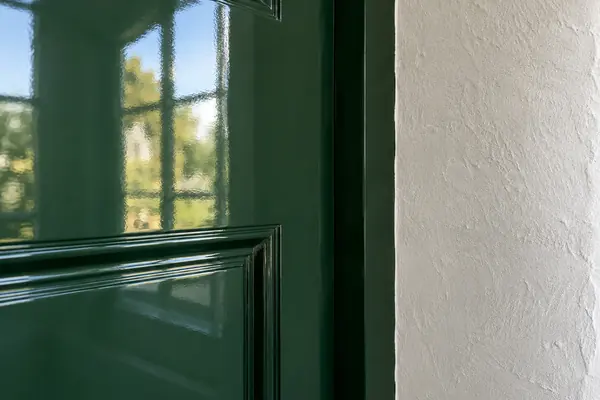
The law of reflection says the angle of reflection equals the angle of incidence. A glossy surface sends most light off at that one angle, so you see a bright highlight.
Check a surface doodlegloss
THE SCIENCE OF SHINE
Gloss is light leaving a surface like a mirror.
IN = OUT the mirror rule
100 GU Polished black glass, at every angle
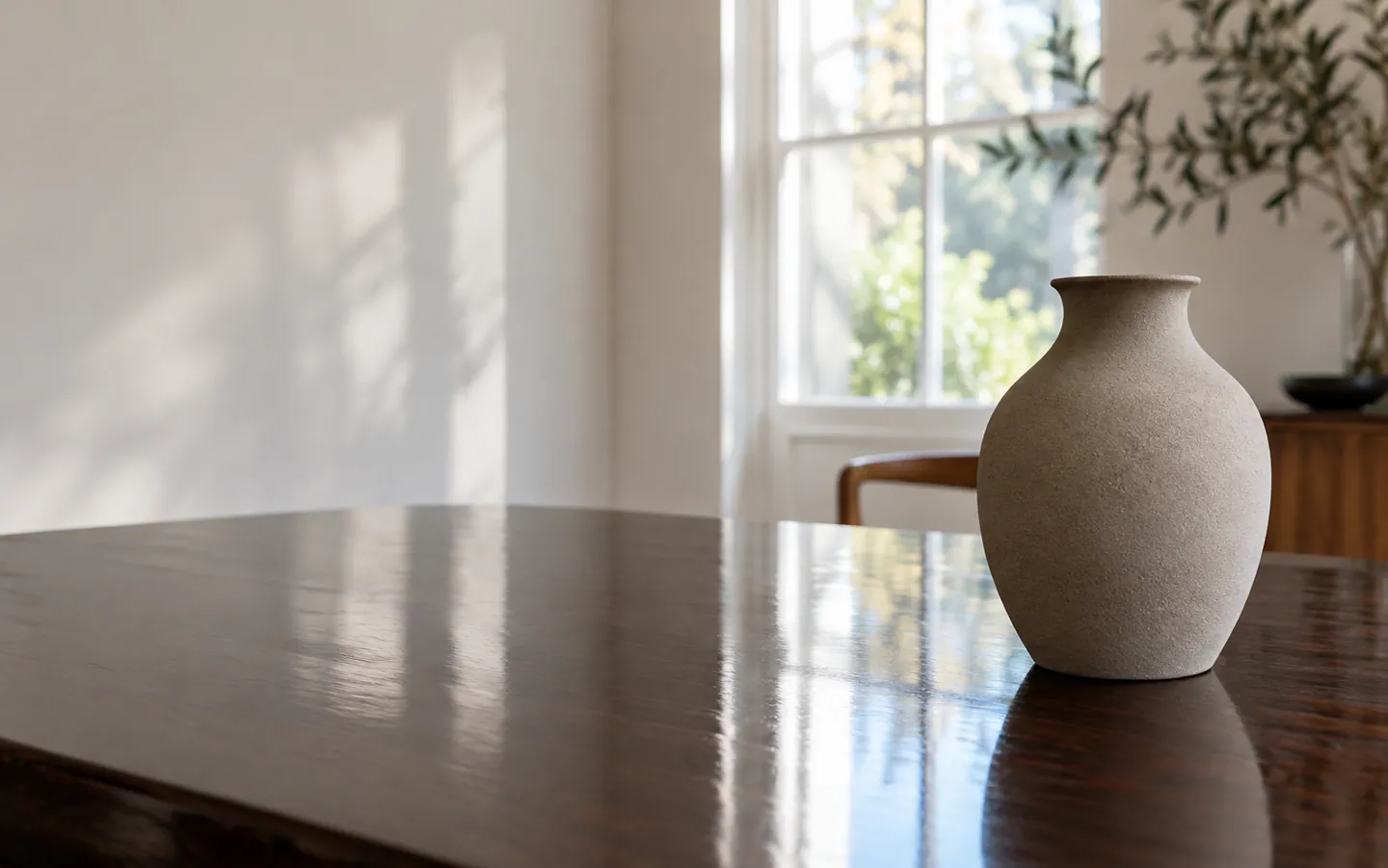
A smooth surface sends light off at one angle; a rough one scatters it every way. That simple difference is why a lacquered table gleams and a sheet of paper does not, and why industry measures shine at fixed angles.
THE SHORT ANSWER
Gloss depends on how much light is reflected like a mirror,
compared with how much is scattered.
THE MIRROR RULE
The law of reflection says the angle of reflection equals the angle of incidence. A glossy surface sends most light off at that one angle, so you see a bright highlight.
Check a surfaceSMOOTH OR ROUGH
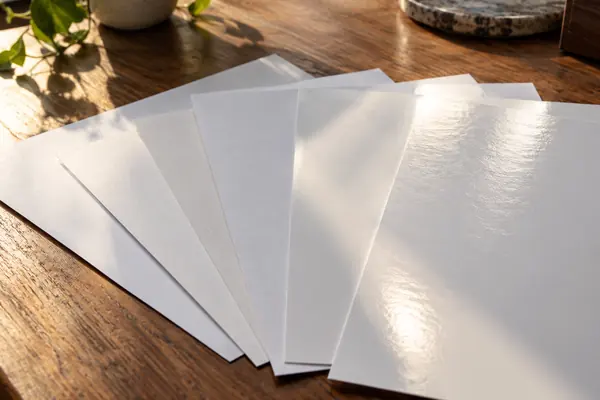
Smooth surfaces look shiny, while rough surfaces scatter light in many directions and look dull. That is why you can see paper from any angle.
Why it happensMEASURING
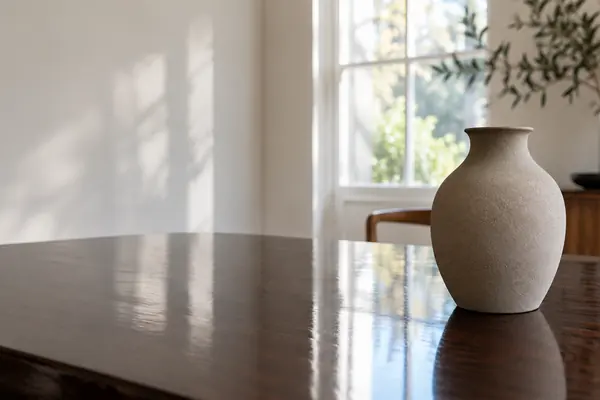
Glossmeters shine light at a fixed angle and measure what comes back. Readings are in gloss units, set against a polished black glass standard.
See the numbersA QUICK SURFACE CHECK
Pick a surface to see which measuring angle is used for it. The bar shows roughly how glossy that kind of surface is.
Angles from ISO 2813 and published descriptions of glossmeter practice. Readings are in gloss units (GU).
FOUR WAYS TO SEE IT
You do not need an instrument to notice the physics. These simple looks follow the same rules the measurements use.
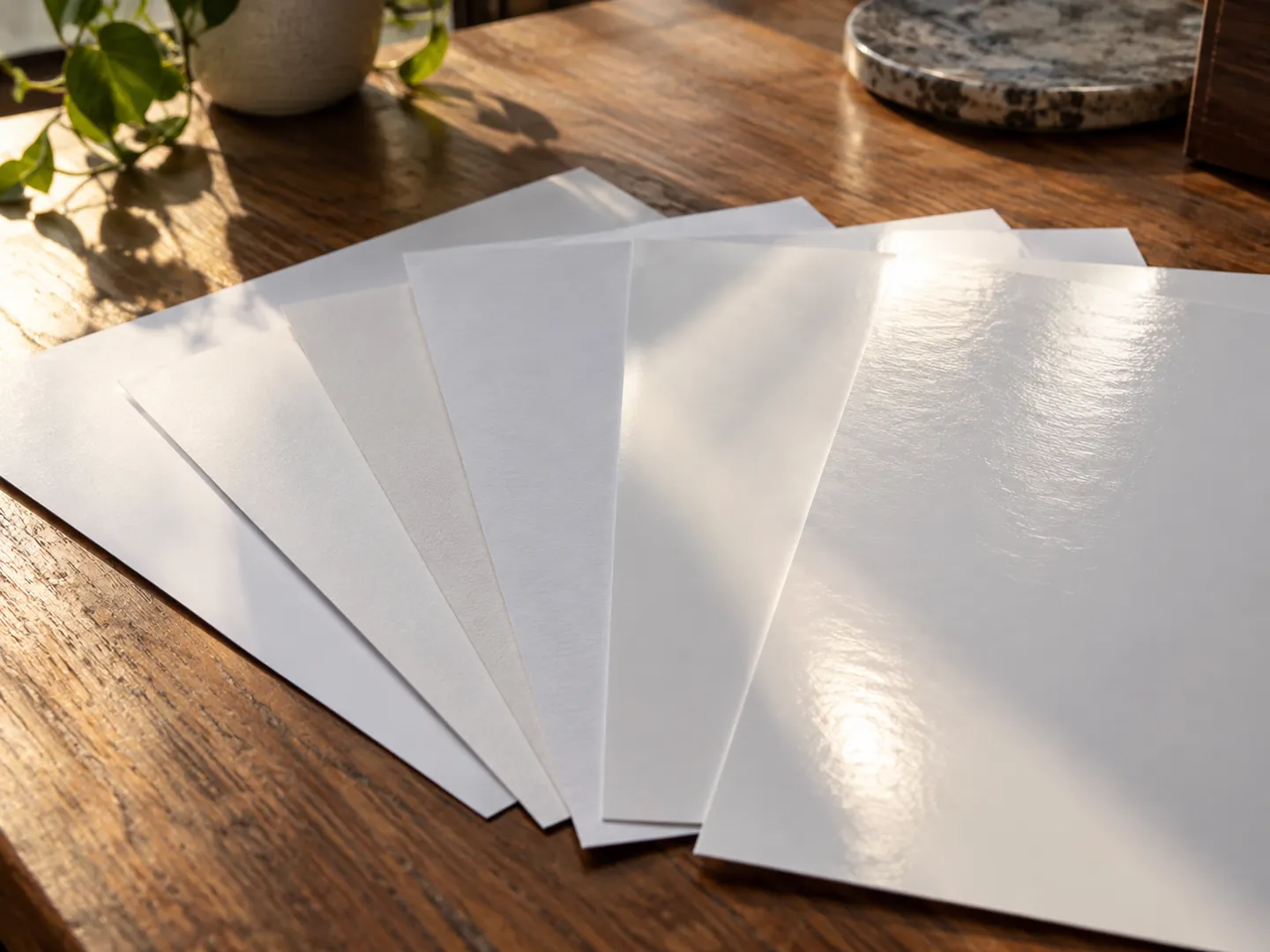
Move until a lamp's highlight appears on a surface. You are now at the angle where incidence equals reflection.
Put paper beside a polished tile. The paper scatters light and looks the same from anywhere; the tile flashes at one angle.
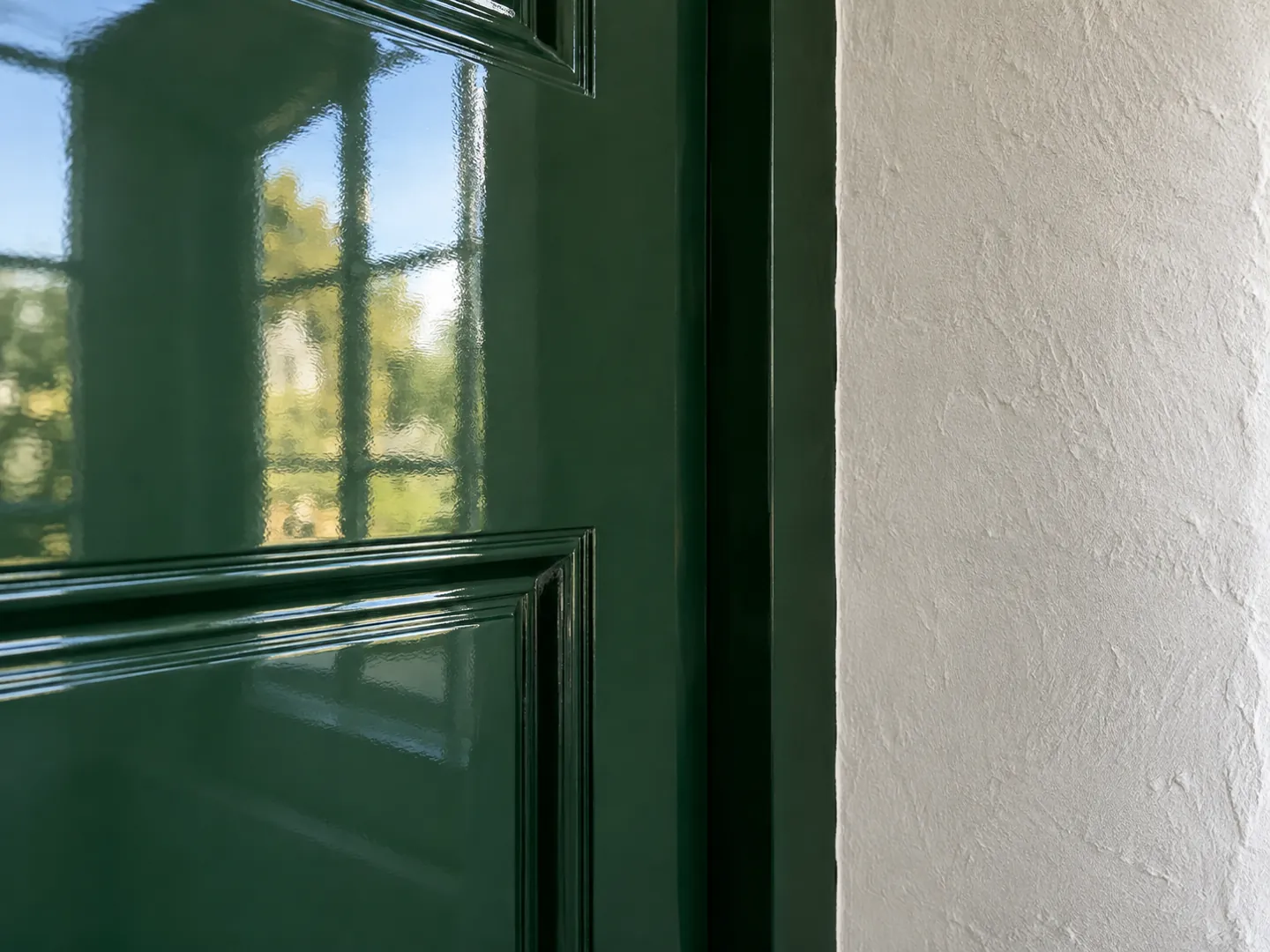
Matt surfaces are measured at a grazing 85°. Look along a matt wall at a low angle and a faint sheen appears.
A gloss reading does not capture haze or orange peel, so two finishes with the same number can still look different.
TWO NUMBERS WORTH KNOWING
One figure sets the scale,
one shows how far past it a mirror goes.
100 GU
Polished black glass, at every angle
Gloss is relative. The scale is anchored by polished black glass with a refractive index of 1.567, given 100 gloss units at each angle. A perfectly matt surface sits at 0.
THE STANDARD · GLOSS UNITS
2,000 GU
Mirrors and plated metal can reach
Highly reflective materials such as mirrors and plated metal can read up to 2,000 GU, far above the black glass standard.
MIRRORS · GLOSS UNITS
The US National Institute of Standards and Technology calibrates industry gloss standards at 20°, 60° and 85° in line with ISO 2813, using a primary standard made of highly polished optical glass.
WHY IT HAPPENS
Whether a surface counts as smooth is judged against the wavelength of light. When it is smooth on that scale, light reflects at specific angles, as from a mirror. When it is rough, light strikes different parts at different angles and goes off in many directions.
The material matters too. Gloss depends on the refractive index of the material and the angle of the light: non-metals reflect more at greater angles, while metals reflect strongly at any angle.
Questions
Gloss is an optical property describing how well a surface reflects light in a mirror-like direction. How glossy it looks depends on how much light is reflected that way compared with how much is scattered.
ISO 2813 sets out these three geometries for coatings. 60° is the standard, 20° is used for high gloss and 85° for matt finishes.
A relative unit. The scale is anchored by polished black glass with a refractive index of 1.567, assigned 100 GU, with a perfectly matt surface at 0.
Yes. Highly reflective materials such as mirrors and plated metal can reach up to 2,000 GU.
No. A glossmeter is not sensitive to effects such as haze and orange peel, which need separate measurements like distinctness of image.
Updated
ABOUT THIS NAME
doodlegloss.com is part of the DoodleSale portfolio. It isn't in an auction right now, but you can ask about leasing it.